
Other Life in the Garden
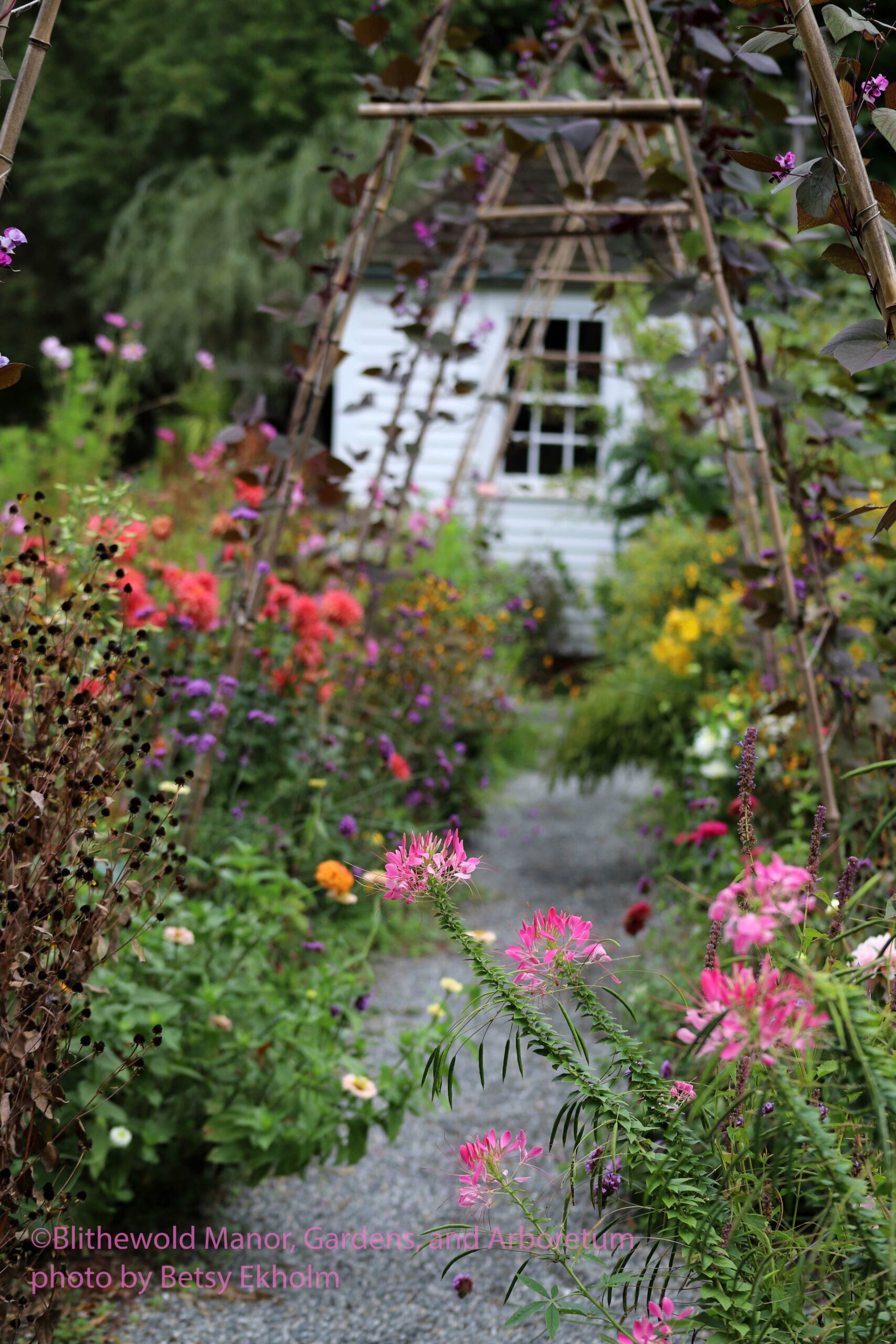
You may have noticed that I have not written my normal blogs this summer. I’ll be honest, I was focused on the class I was taking. I had enrolled in the Pollinator Steward course run by UMass Amherst and I was eager to learn everything I could. Working in the gardens for as long as I have, it is impossible not to notice the details, like the intrinsic connection between plant and insect. Once you start to see them, these relationships are apparent everywhere you look. I was hoping this course would teach me more about the natural world I actively manage and care about.
The gallery below is a small sampling of insects I have seen in the garden in the last few weeks. It is impossible not to pay attention to these gorgeous creatures as they interact with the gardens.
-
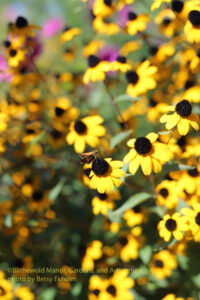
- skipper butterfly (Hesperidae sp.) on brown-eyed Susan (Rudbeckia triloba)
-
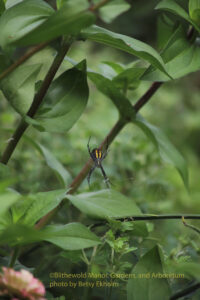
- yellow garden spider (Argiope aurantia) suspended amongst zinnia stems in the Cutting Garden
-
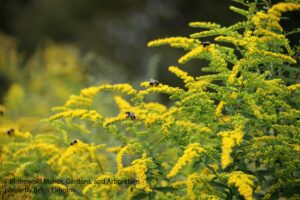
- goldenrod (Solidago sp.) covered in bumblebees (Bombus sp.)
-
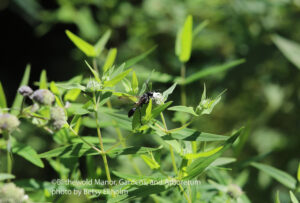
- thread-waisted wasp (Sphecidae sp.) on mountain mint (Pycnanthemum muticum)
Just this week I watched a mason wasp making her nest in a dead stem of Euphorbia cotinifolia. I observed as she returned with her bits of mud to construct the egg cells in the hole she excavated. It was truly fascinating! Now the mason wasp does not have a relationship with this exact plant, but it does have a relationship with deadwood. This is why you may have heard the advice to leave some deadwood and pithy stems standing in your garden. Wasps, bees, spiders and other insects (all critical to our ecosystem) use these materials to overwinter either themselves or the next generation. Without these supplies, the populations of these insects would decline.
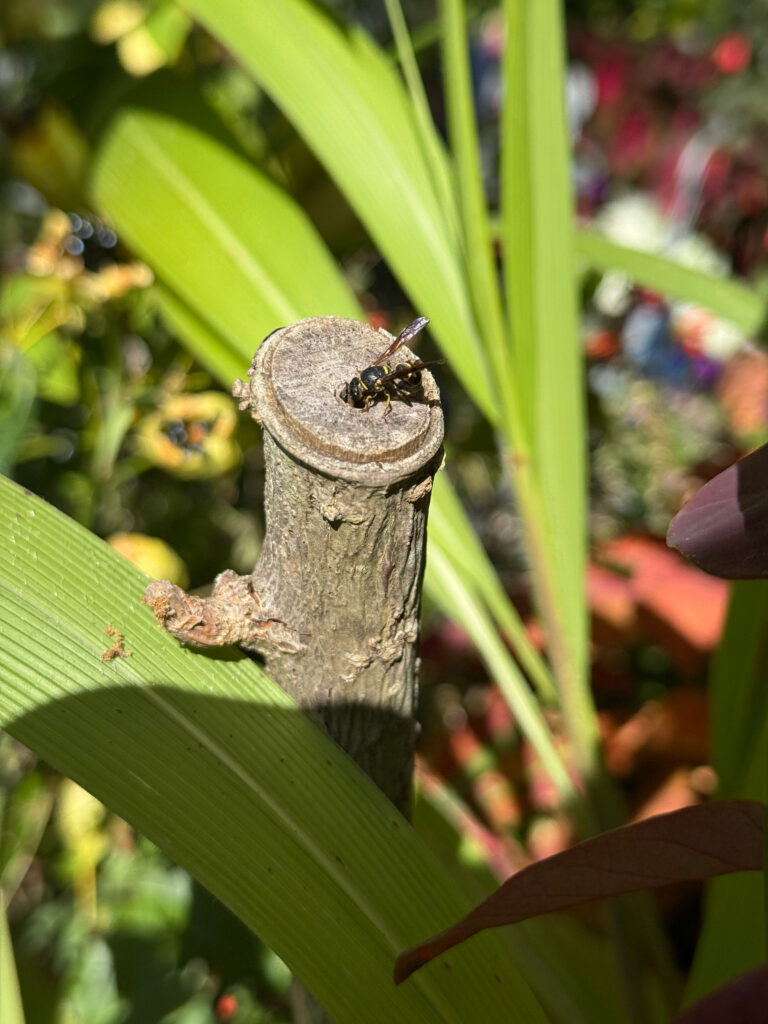
Mason wasp on dead stem of Euphorbia cotinifolia
What, you may ask, does this have to do with the gardens at Blithewold? Well, it has long been my desire to make the gardens at Blithewold as ecologically friendly as possible. Not all of our practices are perfect (and we keep the gardens a bit cleaner than I do my home garden), but overall, we have made great strides in being more mindful of the other creatures we share this space with.
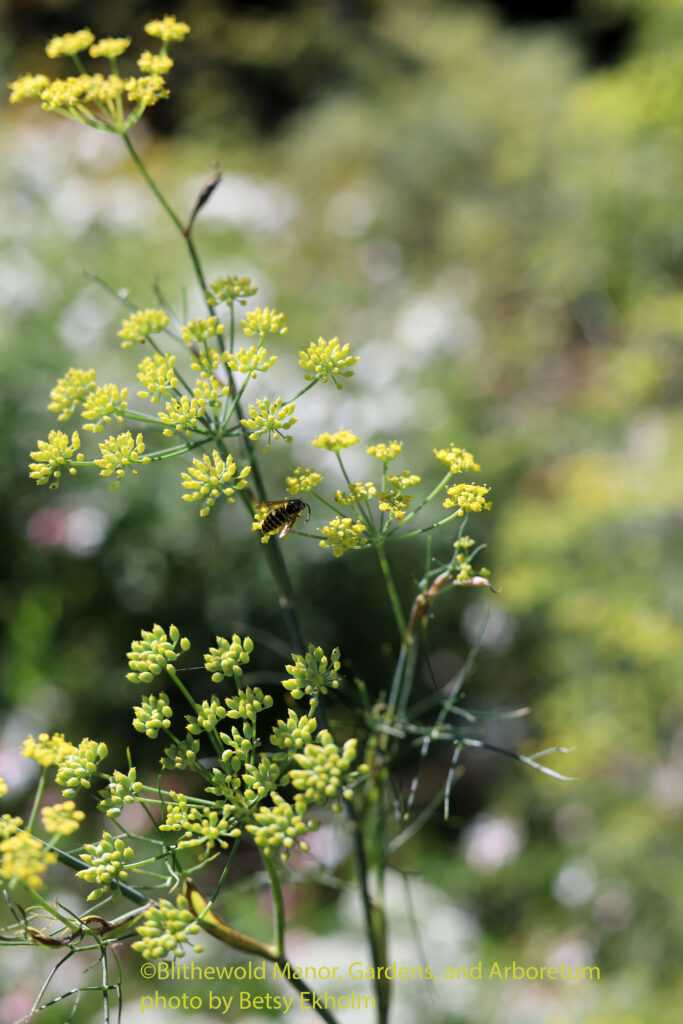
yellowjacket (Vespula sp.) on fennel (Foeniculum vulgare)
It is a privilege to be in the gardens every week year-round. This affords us the beautiful opportunity to observe, to notice, to honor the natural world and its systems. A little curiosity in what we see around us goes a long way. That little tiny mason wasp I saw, for instance, was completely docile. There was not an ounce of aggression in her as I watched her activities. I think it is valuable to learn that so much of nature is not there to cause us harm. Every little creature is really just looking out for itself. And don’t we humans do the same? Even yellowjackets, who get quite the bad wrap, are not seeking to harm us. They nest in a large colony and will defend the colony against any beings they deem to be marauders. Also, in late September and into October, the female yellowjackets who are not queens are kicked out of the nest. They are tired, hungry, cold, and looking for food. This is why they tend to bother us at picnics where there is meat and sugary fruit around. They do not mean us harm, they simply are on the lookout for food. When so much our current landscapes are wastelands for insects, is it any wonder they come to us to look for sustenance? The yellowjackets would ordinarily be nectaring on flowers such as figwort. However, many humans have deemed this plant a weed and regularly remove it from the ecosystem. They also would be eating insects, but many gardens don’t provide habitat for insects with no fallen leaves and no detritus or cover for insects to shelter in. Yellowjackets are labeled the enemy, but perhaps it isn’t their fault that they are starving.
There are so many animals that call our gardens home – not just Blithewold, but also the garden across the street and the one in your own backyard and every garden ever created. It is nearly impossible to garden without also creating something that attracts attention from insects and wildlife. May we all find a way to live in harmony with our insect and animal companions in the garden. I will leave you with more pictures of the gardens being appreciated by non-human visitors.
-
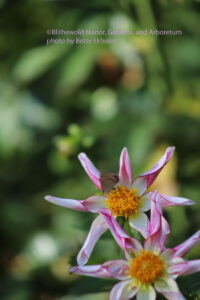
- small copper (Lycaena phlaeas)on Dahlia ‘Willie Willie’
-
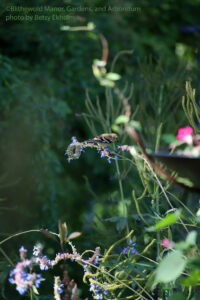
- female goldfinch on bog sage (Salvia uliginosa)
-
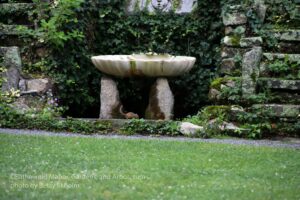
- chipmunk by the fountain in the Sunken Garden
-
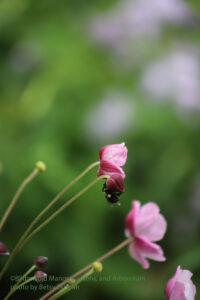
- Bumblebee (Bombus sp.) hiding from the rain under an Anemone flower